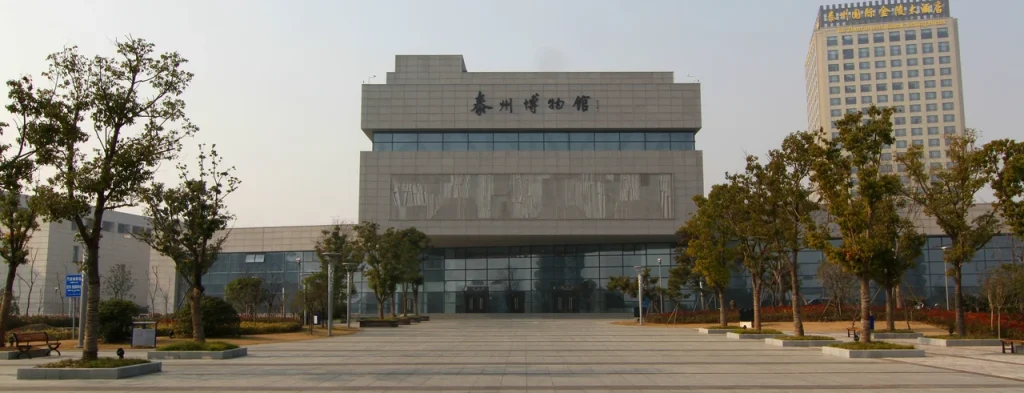
Established in 1958, Taizhou Museum underwent its first expansion and renovation in 1980. In 2013, a new museum building was completed and officially opened to the public. Located at No. 297 Gulou South Road, Taizhou, the museum covers a total building area of over 22,000 square meters, including nearly 6,000 square meters of exhibition space. It currently employs more than 30 staff members across departments such as Exhibition and Public Services, Archaeology and Collection, Collection Management, Administration, Security, and Finance.
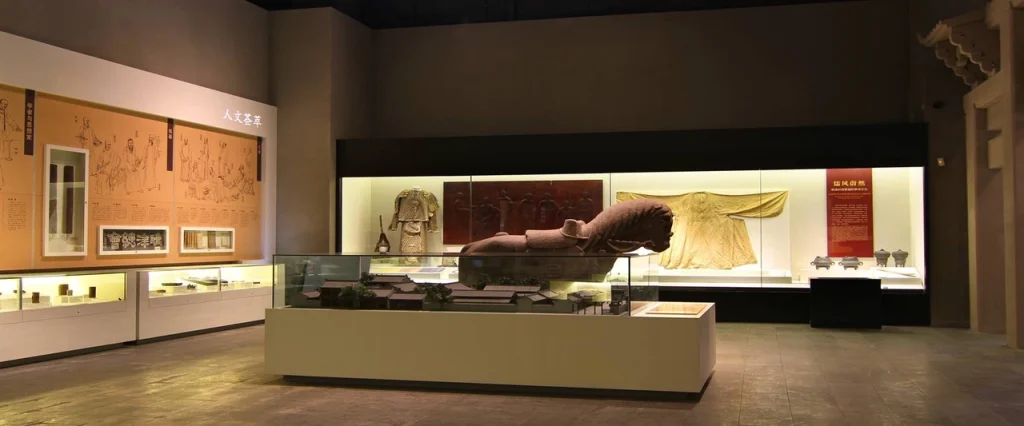
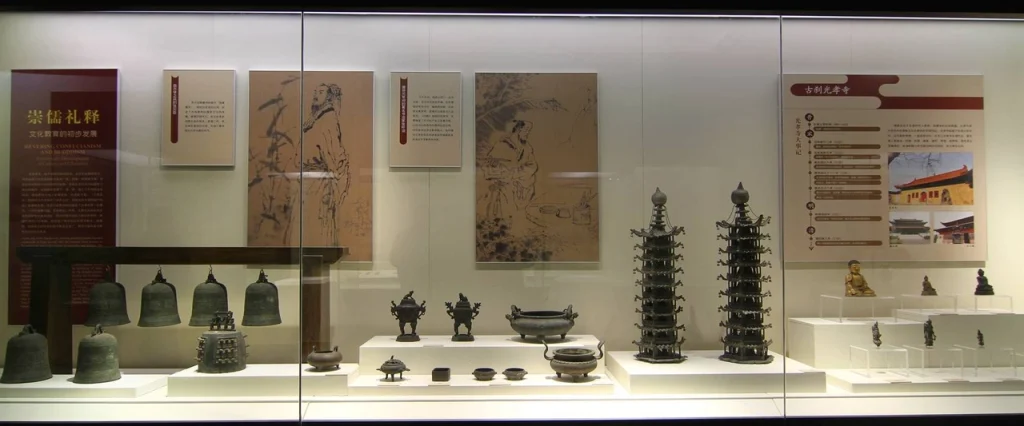
Taizhou Museum is a comprehensive museum primarily dedicated to the collection and preservation of historical cultural relics. It houses nearly 10,000 artifacts of various types, including more than 800 classified as nationally protected Grade I, II, and III cultural relics. Its collections are particularly distinguished in ancient Chinese painting and calligraphy, Ming Dynasty clothing, and Six Dynasties celadon, giving the museum a strong reputation within China’s museum community.
The museum’s collection of ancient paintings and calligraphy is especially rich. It includes works by renowned Ming Dynasty court painter Lü Ji, founder of the Wu School of painting Lan Ying, and other influential artists such as Dong Qichang, Wen Zhengming, Zhang Chong, Tang Zhiqi, Xie Shichen, Wu Bin, Cheng Sheng, and Zhang Feng. The collection also features works by prominent Qing Dynasty figures such as Zhu Da (Bada Shanren), Shi Tao, Yuan Jiang, Chen Zhuo, Pan Simu, Liang Shanzhou, Zhang Cining, Wu Rangzhi, Yun Nantian, and Fei Danxu, as well as members of the Yangzhou Eight Eccentrics including Zheng Banqiao, Huang Shen, Li Shan, and Wang Shishen. Additionally, paintings by artists of the Jinling School such as Cai Ze are included, along with calligraphic works by historical figures such as Liu Yong, Lin Zexu, Tiebao, and Li Hongzhang. Modern masters such as Qi Baishi, Zhang Daqian, Chen Shizeng, and Yu Youren are also well represented in the collection.
The museum’s Ming Dynasty textile collection is particularly noteworthy. It is one of the most complete and concentrated collections of Ming civilian (non-imperial) garments in China, especially silk textiles, representing the finest examples of mid-Ming Dynasty civilian clothing craftsmanship. In ceramics, the museum holds outstanding examples of Six Dynasties celadon as well as porcelain from the Song, Yuan, Ming, and Qing dynasties.
Other significant artifacts include a uniquely preserved nearly complete male elk fossil—the only one of its kind in the world—Han Dynasty bronze mirrors with mythical beast patterns, and hundreds of archival documents from the Forbidden City and the Qing government, along with Qing Dynasty handicrafts. These collections provide valuable physical evidence of China’s long and brilliant civilization.
In addition, Taizhou Museum has a rich collection of revolutionary historical relics, which vividly document the development of revolutionary activities in the Taizhou region, offering important insight into the area’s modern historical transformation.