Tour Duration: Around 120 minutes for the core sightseeing route
Route Overview
Morning: Visit Cultural & Historical Relic Area starting from the entrance on Qinyuan Street
Huishan Gate → Jichang Garden → Huishan Temple → Imperial Stele Pavilion → Ancient Ginkgo Tree (Hongwu Period) → Pine-Listening Stone Bed → The Second Best Spring Under Heaven → Chuihong Corridor → Chunshen Gate
Noon: Local Snack Tasting in Huishan Ancient Town
Sample classic Wuxi local treats: Tofu pudding, Wuxi soup dumplings, shrimp wontons, silver-thread noodles and more.
Afternoon: Stroll through the Historic Block of Huishan Ancient Town
Xishen Square → Grand Screen Wall of Huishan Ancient Town → Xu Ruzi Ancestral Shrine → Zhang Zhongcheng Temple → Fan Zhongwen Ancestral Hall → Gu Kejiu Ancestral Hall → Yang Oufang Ancestral Hall → Upper & Lower River Ponds → Li Gong Shrine → Huishan Garden → Baoshan Bridge → China Clay Figurine Museum
You may pause for tea and rest by the Upper & Lower River Ponds when tired from walking.
Nine Featured Attractions along the Route
Route sequence: Chunshen Stream → Chuihong Corridor → The Second Best Spring Under Heaven → Pine-Listening Stone Bed → Hongwu Ancient Ginkgo → Imperial Stele Pavilion → Huishan Temple → Jichang Garden → Huishan Ancient Town
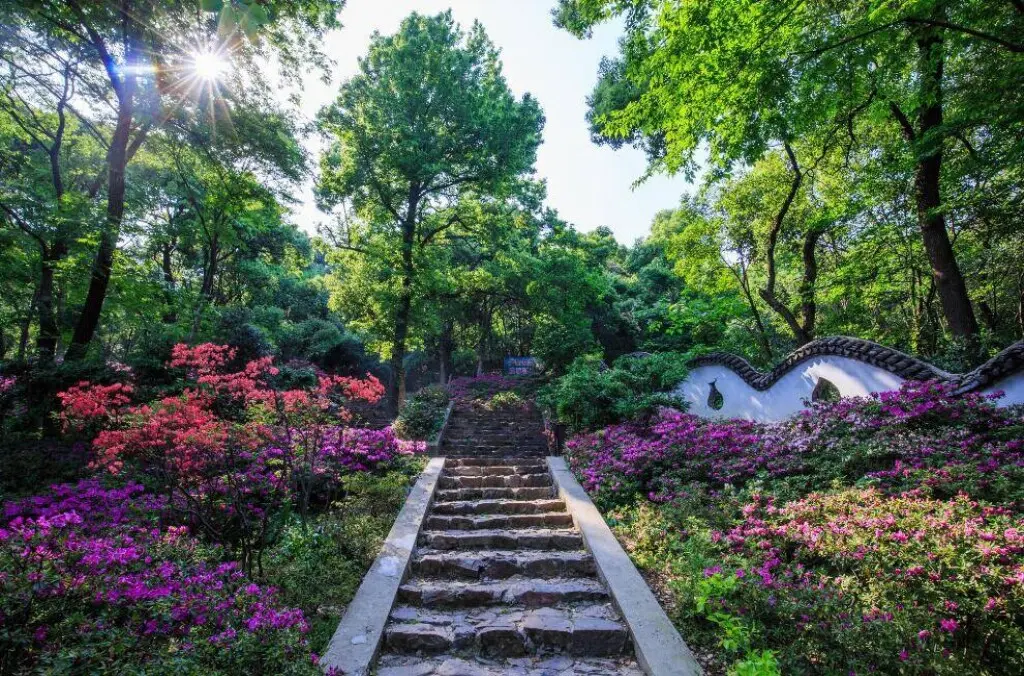
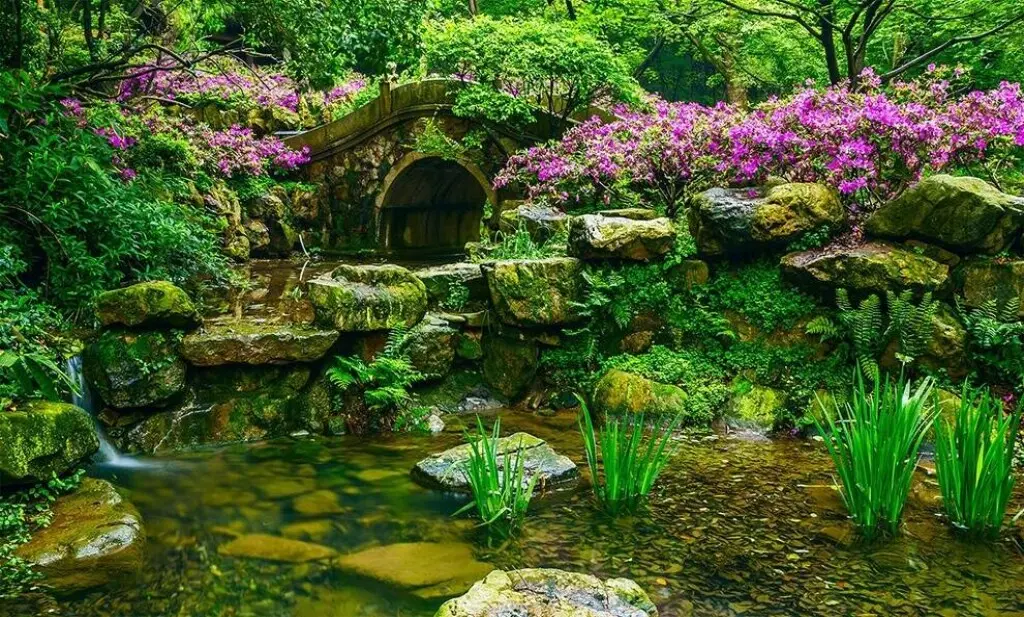
Stop 1: Chunshen Stream
Lying roughly 100 meters south of The Second Best Spring Under Heaven at the eastern foot of Huishan Mountain, the brook is also known as Huanggong Stream. It was named after Lord Chunshen (Huang Xie) of the late Warring States Period, who once watered his horses here, and ranks as a top waterfall-viewing spot in Wuxi
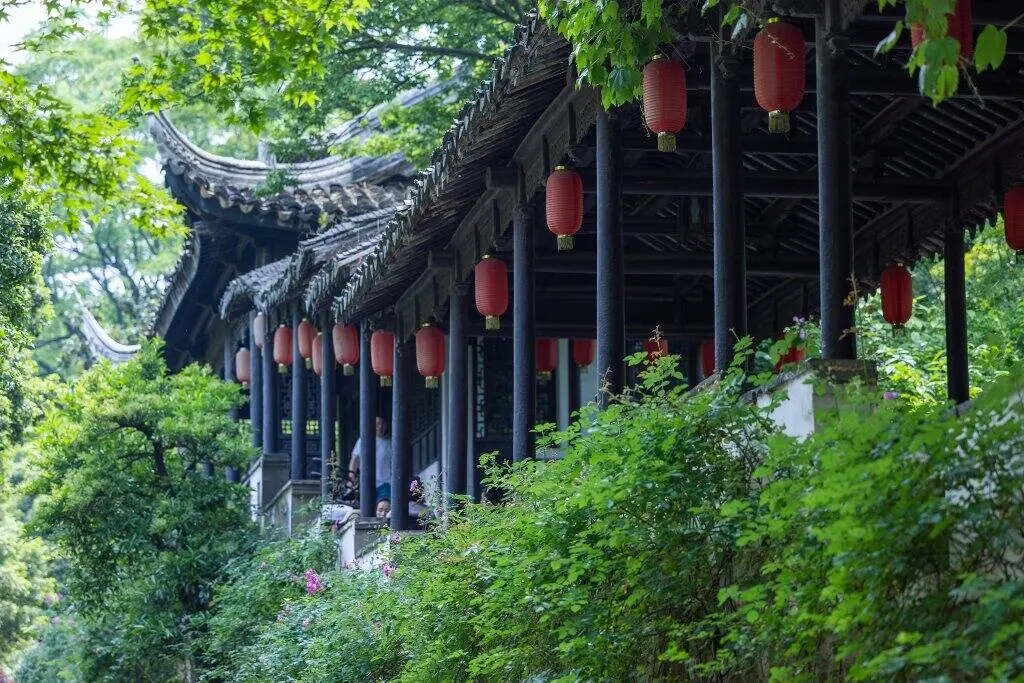
Stop 2: Chuihong Corridor
The covered walkway gets its name for resembling a long dragon sprawling along the hillside.
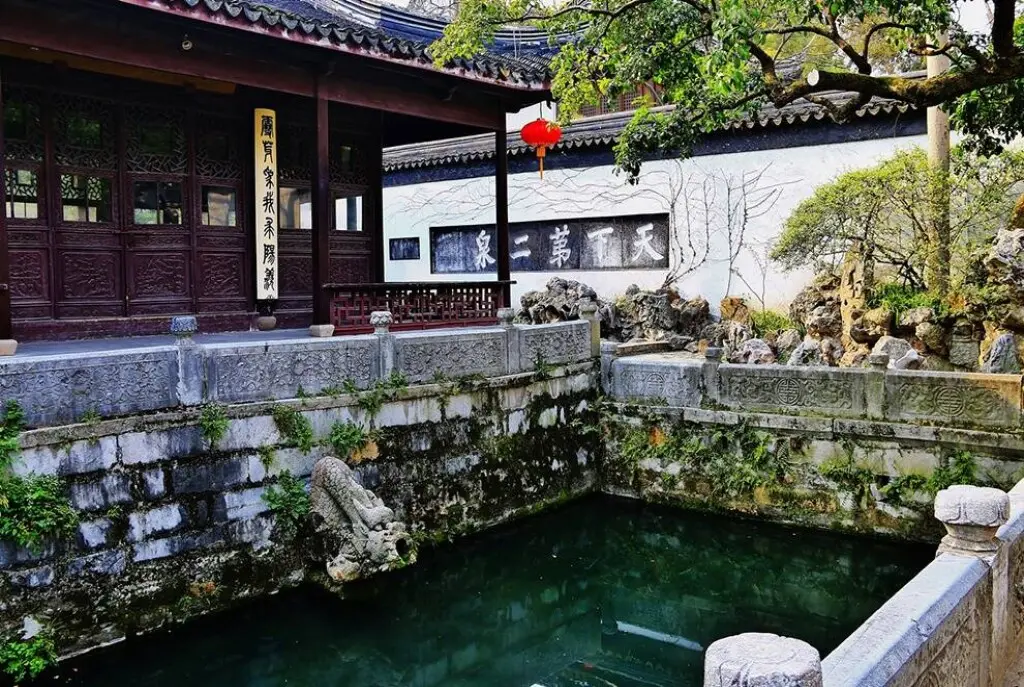
Stop 3: The Second Best Spring Under Heaven (Hui Mountain Spring)
Originally named Yilan Spring, it was excavated in 779 (late Dali reign of the Tang Dynasty) under the order of Jing Cheng, then magistrate of Wuxi. Rainwater filters through sandstone crevices and pine roots on Huishan Mountain, absorbing abundant minerals to form crystal-clear, sweet and mellow spring water renowned across China.
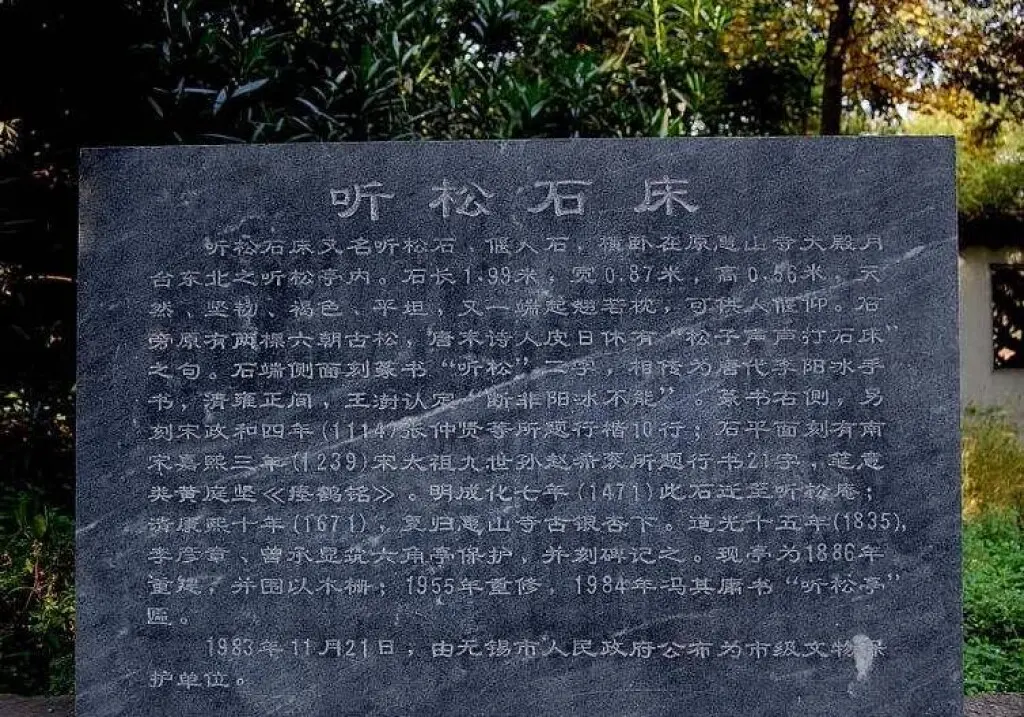
Stop 4: Pine-Listening Stone Bed
Also dubbed Pine-Listening Rock or Reclining Stone, the natural brown glossy boulder measures 1.99m long, 0.87m wide and 0.56m high. Its north end tilts upward like a pillow for visitors to lie down, with three sets of ancient inscriptions including “Listening to Pines” carved on its surface.
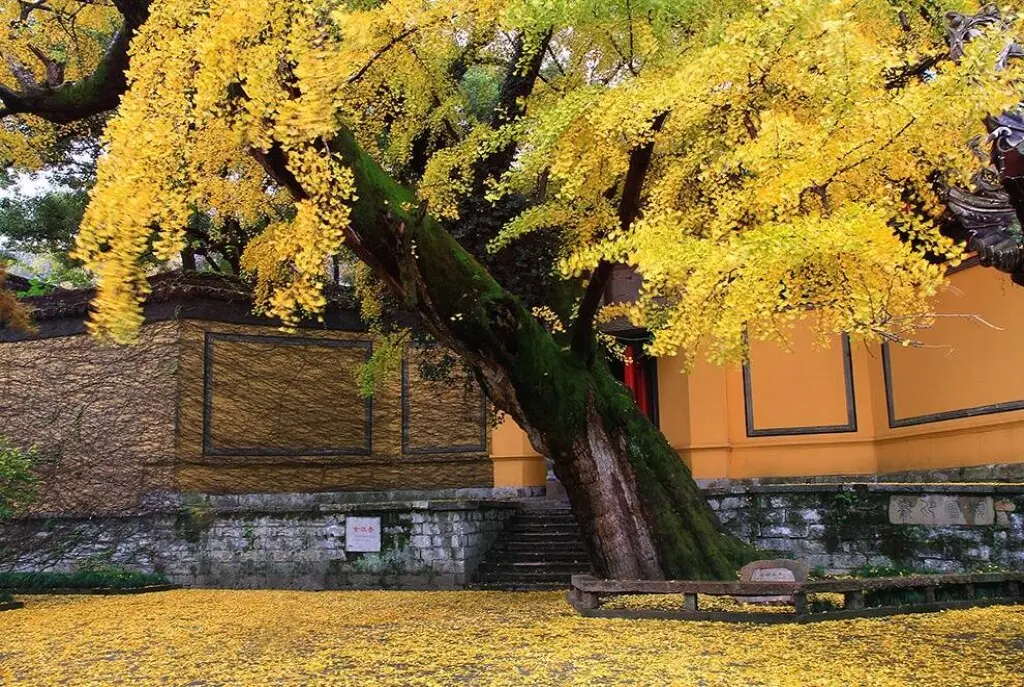
Stop 5: Hongwu Ancient Ginkgo
Standing south of the Pine-Listening Pavilion, this male ginkgo tree (No.002 on Wuxi’s Ancient & Famous Tree Registry) was planted around 1368 (early Hongwu reign of the Ming Dynasty) by Huishan Temple abbot Xinghai. The tallest veteran tree in downtown Wuxi stands 21 meters tall with a trunk nearly 2 meters in diameter, requiring four adults linking arms to encircle it. A creeping fig parasitic on the tree is over 200 years old as well.
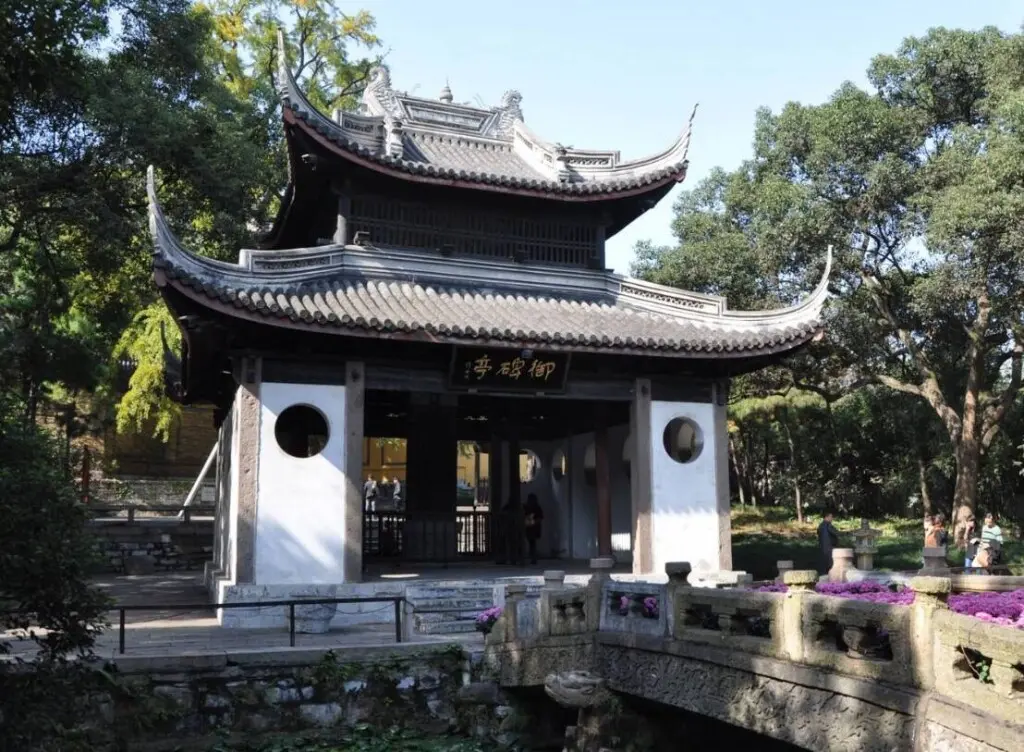
Stop 6: Imperial Stele Pavilion
A double-eaved hip-and-gable pavilion housing stone tablets inscribed with poems composed by Emperor Qianlong during his six southern inspection tours to Wuxi. Verses from his visits in 1751, 1757, 1762 and 1780 are carved on four sides of the steles respectively.
Stop 7: Huishan Temple
Nestled at the west end of Xiuzhang Street and eastern foot of Huishan Mountain, adjacent to The Second Best Spring Under Heaven and Hua Xiaozi Shrine to the south and Jichang Garden & Erquan Academy to the north, Huishan Temple tops the list of Wuxi’s most distinguished ancient Buddhist temples for its profound history and rich cultural heritage.
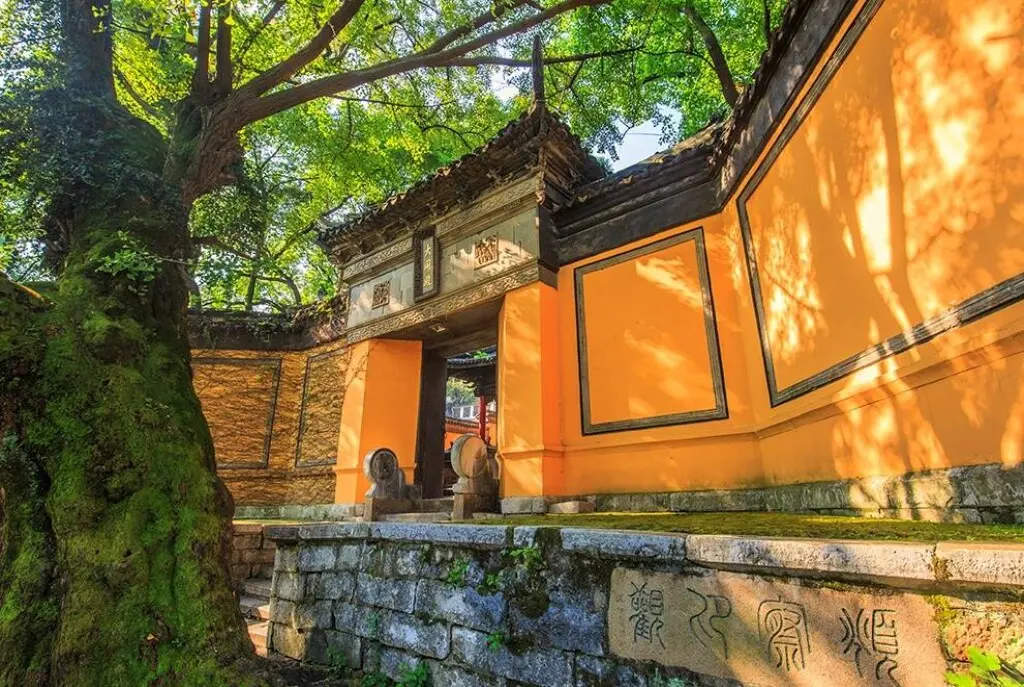
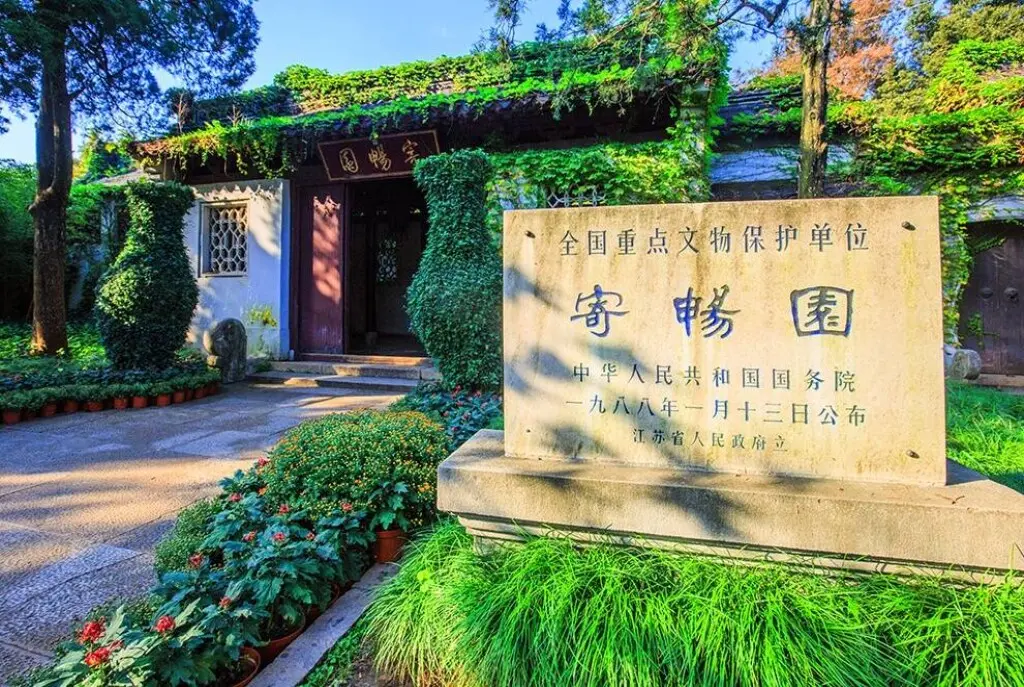
Stop 8: Jichang Garden
Constructed in 1520 (the 15th year of Zhengde reign of the Ming Dynasty) and flourishing from late Wanli through Kangxi & Qianlong periods of the Qing Dynasty, it is a famous foothill-style classical Jiangnan garden. Listed as a Major Historical and Cultural Site Protected at the National Level in 1988, it is the sole surviving Ming-dynasty classical garden in Wuxi.
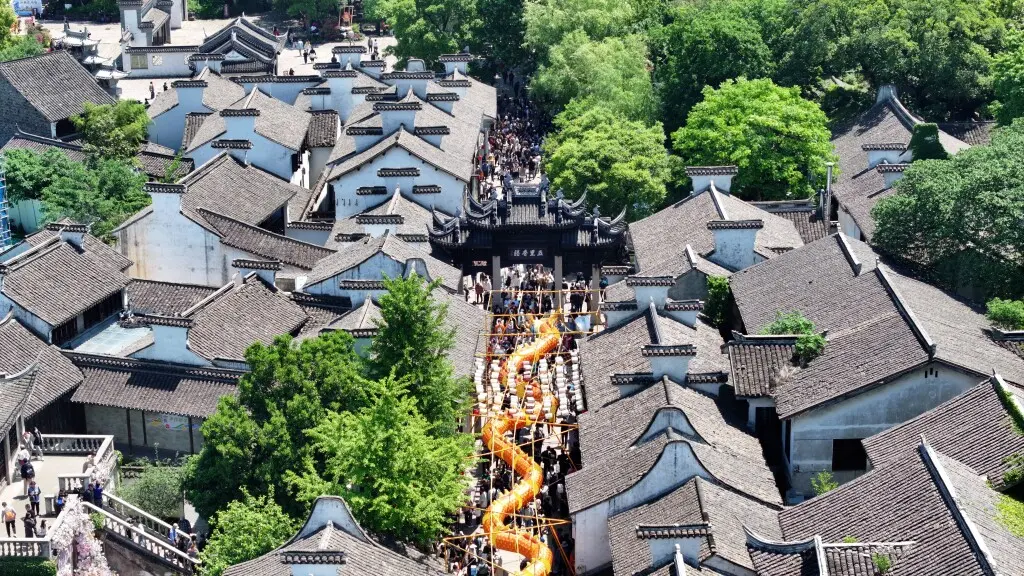
Stop 9: Huishan Ancient Town
A well-preserved historic ancient town cluster boasting dozens of ancient ancestral halls, traditional Huishan clay figurine craftsmanship and profound Wu-region folk culture.