On the eve of the May Day holiday, Niu Shou Mountain in Nanjing was ablaze with greenery. In a ward at the Jiangning Branch of Jiangsu Provincial Hospital of Traditional Chinese Medicine, 79-year-old Nur Muhammad from Uzbekistan was resting with his eyes closed, surrounded by the delicate fragrance of mugwort. His grandson, Nur Ali, relayed his grandfather’s feelings to a reporter in English: “He has truly experienced the ‘harmony of yin and yang’ often spoken of in traditional Chinese medicine.” On 26 April, in the Rehabilitation Department of Changzhou Hospital of Traditional Chinese Medicine, 38-year-old Azad from Bangladesh presented a commemorative banner – he had come to China specifically to receive TCM treatment, and his chronic cervical spine condition, for which he had originally been advised to undergo surgery, had improved.
Since the start of this year, the convenience of ‘China Travel’ has frequently been praised by foreign netizens on social media, whilst ‘seeking medical treatment in Jiangsu’ has also quietly gained momentum. From traditional TCM wellness and recuperation to highly complex surgical procedures, hospitals in Jiangsu are becoming a popular ‘must-visit destination’ for an increasing number of foreign nationals seeking healthcare.
A First-Time Experience: From ‘Visiting Tourist Attractions’ to ‘Experiencing TCM’
‘It would be a shame to come to China without trying TCM. ” Nur Ali translated his grandfather’s words to the reporter, his voice tinged with a hint of excitement. This was not his first visit to China, but whereas previous trips had been for general tourism, this time he had come specifically for traditional Chinese medicine. In Uzbekistan, traditional Chinese medicine has gradually become known through films and the media, but Nur’s family had never experienced it first-hand. “We all felt that this must be a more natural and gentler form of treatment.”
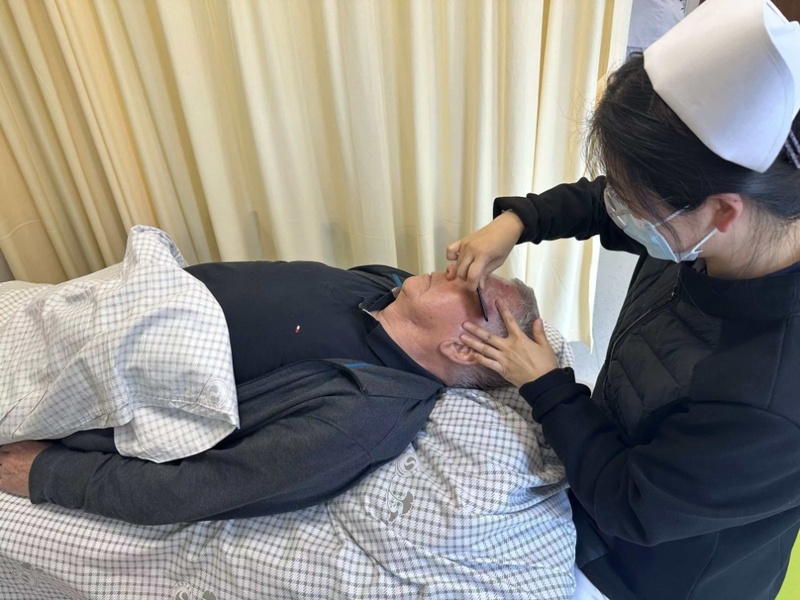
Upon arriving in Nanjing on 15 April, the grandfather and grandson’s first port of call was the Zhongshan Campus of the Jiangsu Provincial Hospital of Traditional Chinese Medicine. There, the elderly man underwent a fairly comprehensive medical check-up. The results showed that his heart failure indicators were elevated, his kidney function was outside the normal range, and he had some swelling in both legs. “When we’re out and about, Grandad occasionally feels a tightness in his chest, as if he’s been pricked by a needle,” said Nur Ali. To balance recuperation with treatment, on 23 April, the elderly man was admitted to the Rehabilitation Centre at the Jiangning Campus, which offers a more tranquil environment.
In light of Nur Muhammad’s physical condition, the Rehabilitation Centre devised a bespoke, gentle comprehensive treatment plan based on traditional Chinese medicine. Li Qinglin, a resident TCM physician, explained: “We use acupuncture to regulate the functions of his spleen and stomach and improve local circulation in his lower limbs.” As the elderly man often felt a chill below his knees, the medical team administered moxibustion, allowing the warmth of the medicinal properties to gradually permeate downwards from his knees. In addition, they taught him several health-preserving exercises to help improve circulation in his hands and feet.
In Ward 8 of the Rehabilitation Centre, Head Nurse Huan Linlin and her colleagues introduced the elderly patient to a range of traditional therapies—guasha, cupping, aromatherapy, as well as speciality TCM teas and herbal foot soaks. To Huan Linlin’s surprise, both the patient and his family were extremely receptive to these treatments; “They even wanted to take some of these products, which embody the unique culture of traditional Chinese medicine, back to their home country.”
Nur Ali, who remained by his grandfather’s side throughout, observed every treatment closely. Although the sessions were not particularly long, his grandfather told him that he had already felt a sense of inner balance and relaxation, and that he was enveloped by a positive mood. “Just as the Chinese saying goes, ‘the harmony of yin and yang’—I have experienced it,” ” Nur Ali relayed his grandfather’s feelings. When asked what he most wanted to take back home, Nur Ali gestured and said: “It’s the kind of incense stick they light here before bedtime. It looks rather unassuming, but once lit, the fragrance quickly helps you relax and you sleep very soundly.”
This experience has changed his view of traditional Chinese medicine. “The whole treatment experience has given me a completely new understanding of traditional Chinese medicine. I wasn’t particularly interested in it before. But now I’ve started messaging my friends, telling them they absolutely must come and try it for themselves. My grandfather has also said he’ll recommend this place to his friends.”
A similar story unfolded in Changzhou. On 26 April, Azad was discharged from hospital, and he presented a commemorative banner to express his gratitude to the Rehabilitation Department of Changzhou Municipal Hospital of Traditional Chinese Medicine.
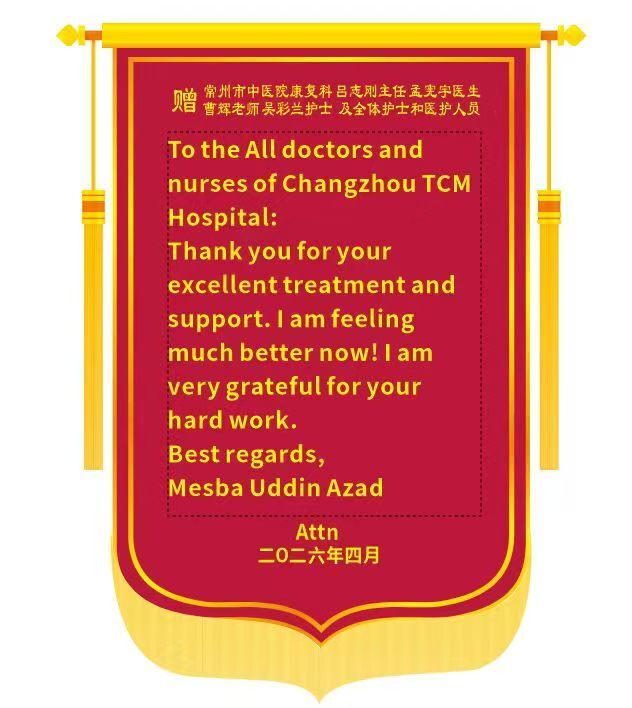
Azad was suffering terribly from nerve compression caused by a herniated disc at the C5/C6 level; he experienced severe pain in his neck and shoulders that radiated to his left upper limb, and frequently felt numbness. An MRI scan revealed a clear herniated disc compressing the nerve. In Bangladesh, the doctors who examined him advised that surgery was necessary, leaving Azad and his family torn.
Lü Zhigang, Head of the Rehabilitation Department, led his team in conducting a detailed assessment of Azad and devised a conservative treatment plan centred on Traditional Chinese Medicine. During treatment, the team first utilised the Cheng Family’s Tongtuo Method of the Menghe Medical School to holistically regulate the flow of qi and blood in the Governor Vessel,
followed by acupuncture at the reaction point on the third metacarpal bone to alleviate symptoms in the upper limb, whilst simultaneously applying local acupuncture to the neck. For the manual therapy component, the team employed the ‘suspended traction and stretching’ technique characteristic of the Menghe School of Medicine. This involved releasing muscle and tendon spasms in the neck and shoulders and realigning the cervical vertebrae, supplemented by continuous bedside traction to consolidate the realignment. After a week of treatment, Azad’s pain had significantly subsided and the numbness in his left hand had markedly diminished. Lü Zhigang told reporters that this precisely demonstrates the unique advantages of traditional Chinese medicine in treating radicular cervical spondylosis. “Through a combination of acupuncture, tuina massage and Chinese herbal medicine, we precisely target the affected segment to eliminate inflammation and oedema around the nerve roots and improve local circulation; many patients can thus be spared the ordeal of surgery.”
‘Embroidery on tofu’: defusing a ‘time bomb’ in a millimetre-scale space
If the gentleness and holistic approach of Traditional Chinese Medicine are a cultural calling card for Jiangsu’s healthcare system, then its ‘hard-core expertise’ in the field of high-difficulty surgery is the confidence that attracts critically ill patients to seek treatment across borders.
Earlier this year, Mr Li, a 67-year-old British-Chinese national, underwent a CT scan for a cough and was unexpectedly diagnosed with a space-occupying lesion in his pancreas. “Some people asked if I should seek treatment in the UK, but I decided almost without hesitation to be treated here in China, because I have a team I can trust,” he recalled. Following an enhanced CT assessment at the Pancreatic Centre of the Jiangsu Provincial People’s Hospital, he was diagnosed with an intraductal papillary mucinous neoplasm (IPMN) of the main pancreatic duct, a condition with malignant potential for which surgical resection is the treatment of choice.
Pancreatic surgery is often referred to as the ‘crown jewel’ of abdominal surgery, and pancreaticoduodenectomy is among the most technically demanding procedures. Professor Jiang Kuirong’s team at the Pancreatic Centre took on this challenge. Prior to the operation, given Mr Li’s long history of Parkinson’s disease and the significantly elevated perioperative risks, the multidisciplinary team devised a meticulous management plan and contingency measures.
The situation on the operating theatre proved more complex than anticipated: the tissue in the affected area was tightly adherent, and the normal anatomical spaces had virtually disappeared. “It was like embroidering on tofu,” described Associate Chief Physician Lu Zipeng, the first assistant surgeon. “The pancreas is densely supplied with blood vessels; the slightest misstep could lead to massive haemorrhage.” Thanks to the team’s seamless coordination, the lesion was completely resected, with intraoperative blood loss amounting to only approximately 200 millilitres.
Crucially, the surgical team utilised an intraoperative pancreatic duct endoscope, just 2.8 millimetres in diameter, to assess the pancreatic duct and determine that part of the pancreatic body and tail could be preserved. Jiang Kuirong explained that this preserved not only tissue but also the patient’s post-operative digestive function, nutritional status and ability to regulate blood sugar – factors directly linked to quality of life. “This operation achieved the ‘right balance between resection and preservation’—the ultimate goal pursued by pancreatic surgeons: safety, thoroughness, and ensuring the patient can live well.” The final pathology report revealed that the tumour had not yet become malignant, so no post-operative chemotherapy was required, and Mr Li was discharged from hospital 17 days later.
“From my initial consultation to being admitted for surgery, the waiting time was less than 10 days. Not only was the standard of surgery high, but the efficiency of the treatment process was also excellent. This was the best decision I could have made.” Mr Li’s sentiments echo those of many patients seeking medical treatment abroad.
If Mr Li’s surgery tested the surgeons’ ability to operate with pinpoint precision within a complex anatomical structure, then the challenge faced by the urology team at Jiangsu Provincial Hospital of Traditional Chinese Medicine was one of ‘millimetre-level’ accuracy.
In late January this year, a five-year-old child from Kazakhstan arrived in Nanjing accompanied by his parents. The child had previously undergone surgery locally for haematuria, but the procedure had ended in failure. After extensive enquiries, the family found the Department of Urology at Jiangsu Provincial Hospital of Traditional Chinese Medicine. “A child’s ureter is less than a quarter of the diameter of an adult’s; it is as thin as a strand of hair, with a thin and delicate wall, leaving virtually no room for manoeuvre,” explained Xu Yan, Director of the Department of Urology. It was precisely due to concerns that forceful manipulation might cause tearing or perforation that the surgery in the child’s home country had to be suspended.
Pre-operative examinations revealed a stone measuring six or seven millimetres in diameter, lodged precisely within an extremely narrow section of the ureter. Although the team has performed over 300 paediatric stone removal surgeries in the past decade—with the youngest patient being just 11 months old—Xu Yan admitted that this remained an exceptionally challenging case. During the operation, the lead surgeon advanced his finger gently, proceeding with the utmost caution with every millimetre of progress, whilst precisely fragmenting and extracting the stone within a passage as thin as a strand of hair. Thirty minutes later, the stone was successfully removed without any complications. The child has now returned home safely, and the team continues to provide post-operative rehabilitation guidance via translation software.
‘Move in with just a suitcase’ amidst green mountains and clear waters: Jiangsu accelerates the development of international healthcare
In addition to cutting-edge technology, innovations in service models are also boosting the appeal of Jiangsu’s international healthcare sector.
The International Medical Department at Wuxi Second People’s Hospital, which has been in operation for over two years, has now become the preferred choice for many expatriates and high-end domestic patients. This department, which integrates the hospital’s best resources, implements a ‘co-management model’ featuring seamless coordination across prevention, screening, diagnosis, treatment and rehabilitation, as well as a one-stop medical service combining ‘general practice, specialist care and multidisciplinary consultations’. A pool of experts comprising specialists from 27 provincial and municipal-level key clinical departments in Jiangsu and Wuxi, working alongside psychological counsellors and nutritionists, collaboratively develops personalised treatment and health check-up plans for patients.
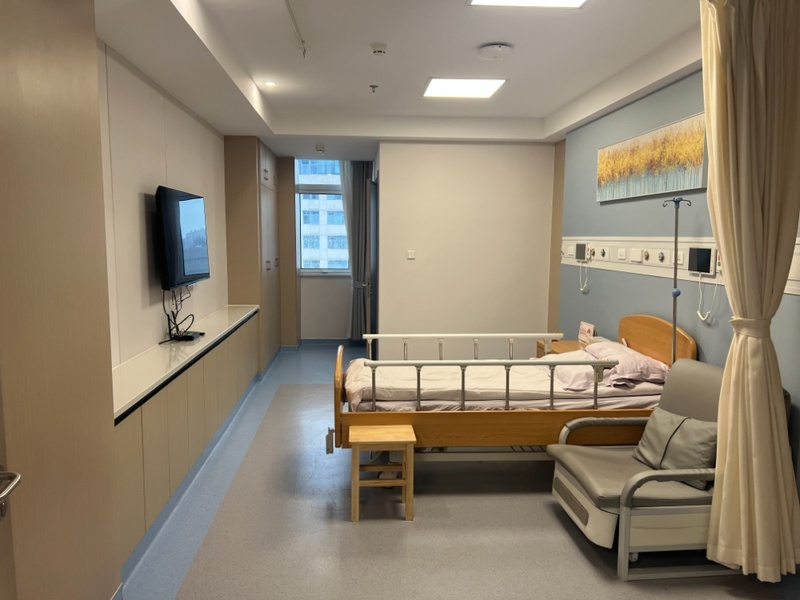
Yang Lei, Director of the International Department at Wuxi Second People’s Hospital, explained that the department currently has 18 beds, comprising two en-suite rooms and 16 single rooms. Modelled on serviced apartments, it offers a ‘one-stop, concierge-style, move-in-ready’ service, complete with toiletries, a fridge, a microwave and other amenities, as well as a fitness and leisure area and a visitors’ lounge. To minimise waiting times, the International Medical Department has established a fast-track channel for laboratory tests and diagnostic examinations, with dedicated staff accompanying patients throughout the process; admission and discharge procedures can be completed at the patient’s bedside. Regarding fees, the consultation fee for specialist consultations is 350 yuan per visit, with single-room accommodation costing 980 yuan per day and suite accommodation 1,880 yuan per day.
With an increasing number of foreigners coming to China for medical treatment, might this place a strain on domestic healthcare resources? Yang Lei explained that specialists in the International Medical Department must first ensure they fulfil their consultation hours and appointment quotas in the general outpatient department. “The core purpose of the International Department is to meet differentiated needs, not to divert public service resources,” he said. He further clarified that the hospital has an approved bed capacity of 1,800; the International Department’s 18 beds currently account for just 1 per cent of the hospital’s total approved beds and operate with independent management and accounting. ‘We ensure at the very outset that international medical services and basic medical services develop in distinct yet complementary ways, so as not to affect the healthcare needs of the general public.’
Meanwhile, at the Jiangning Campus of Jiangsu Provincial Hospital of Traditional Chinese Medicine, this service is being integrated into the picturesque surroundings of green mountains and clear waters. Liu Lanying, Deputy Director of the Acupuncture Department at Jiangsu Provincial Hospital of Traditional Chinese Medicine and Director of the Rehabilitation Centre at the Jiangning Campus, stated that with the modernisation and internationalisation of traditional Chinese medicine, an increasing number of international visitors are willing to come to China to travel or experience traditional Chinese medical treatments. The Jiangning Campus, which combines rehabilitation, clinical treatment, health preservation and elderly care functions, is situated adjacent to the Niushou Mountain Scenic Area. This year, it plans to formally launch international medical services, offering a combination of treatment and health preservation tailored to common conditions among international visitors—such as sleep disorders, obesity and musculoskeletal problems—using the distinctive features of traditional Chinese medicine to promote the global dissemination of TCM culture.
Relevant reports indicate that by 2025, the number of overseas patients travelling to China specifically for medical treatment will reach 413,000 visits, representing a year-on-year increase of 63 per cent. A representative from the Jiangsu Provincial Health Commission noted that in recent years, the state has introduced policy incentives to encourage public hospitals to develop specialised medical services in a regulated manner. Beijing and Shanghai have already established international healthcare service models centred on the international departments of public hospitals and high-quality private medical institutions, providing a reference for Jiangsu. Jiangsu boasts abundant medical resources and a large number of high-calibre public hospitals, with Nanjing and Suzhou being among the first batch of cities designated as pilot sites for wholly foreign-owned hospitals. Moving forward, Jiangsu will actively respond to the demand for international medical services from expatriates, high-net-worth individuals within China and cross-border patients, and will vigorously promote the development of international medical services. Firstly, the province will implement the pilot programme for wholly foreign-owned hospitals, streamline approval procedures for the establishment of such hospitals and actively facilitate the implementation of foreign-invested hospital projects. Secondly, high-calibre public hospitals will be encouraged to establish international medical departments, integrate with commercial insurance schemes, broaden revenue streams and enhance operational efficiency and quality. At the same time, this will drive the upgrading of the biopharmaceutical industry, promote the integration of healthcare with health management, medical tourism, insurance and finance, and harness the benefits of industrial clustering.