The first public museum established by Chinese people independently 丨 First-batch national first-class museum 丨 5A-level tourist attraction
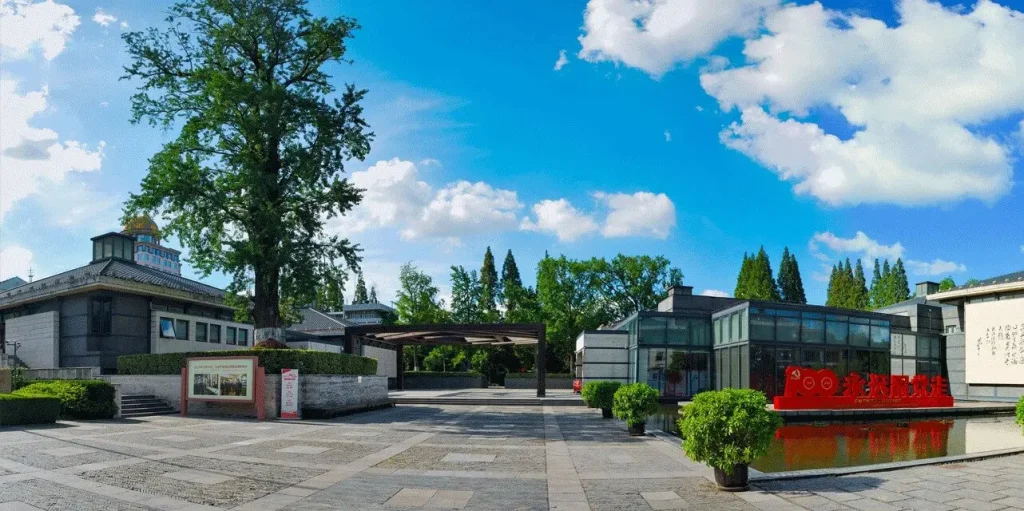
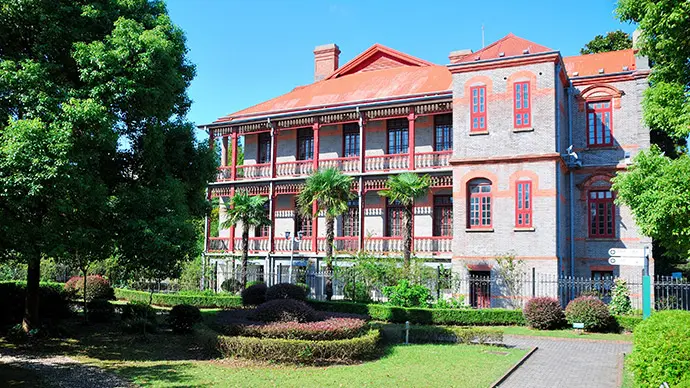
Nantong Museum is a comprehensive museum that integrates ancient Chinese-style gardens and Western museums. At first, its collection covered four aspects, namely nature, history, fine arts, and education. The total number of its collection in 1933 was 3,605. The Museum consists of the Southern Hall, the Central Hall, and the Northern Hall. Ancient objects, specimens, artworks, and models are exhibited indoors. Living animals and plants, as well as large cultural relic specimens are displayed outdoors. All the captions are in Chinese, Japanese, and Spanish. The three major pavilions constituting the central axis in the north-south direction are surrounded by trees and flowers. Several multi-function landscape buildings in various styles are around the central axis, such as the East Pavilion, the Tengdong Waterside Pavilion, the Xiangqin Pavilion, the Chixu Pavilion, the Qian Pavilion, the Huazhu Pingan Pavilion, the Windmill, the Water Tower, and the Waterfall. Each one of the landscape buildings were inscribed by Zhang Jian in person.
In 1938, Japanese aggressors occupied Nantong and turned Nantong Museum into their stable. Most of the cultural relics kept by the Museum were destroyed or looted. By the eve of the liberation, Nantong Museum had become nothing but weeds and crumbling walls.
Nantong Museum was reborn as the P.R.C. was founded in 1949. Through the efforts of generations of people, the basic layout of the Museum has been preserved and attached importance to by the national and the local governments. Nantong Museum was listed as a “major historical and cultural site protected at the national level” by the State Council in 1988.
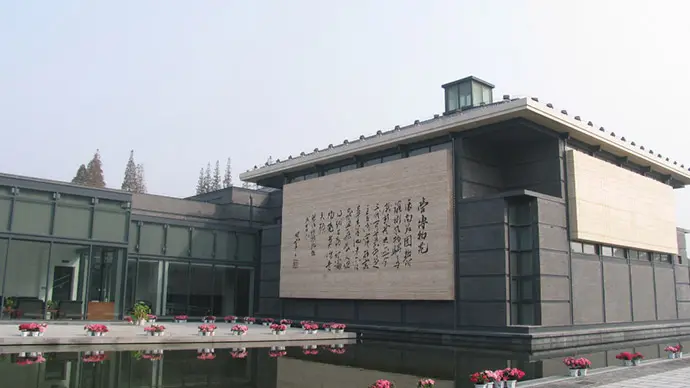
In 2005, Nantong Museum celebrated its 100th birthday. Government at all levels paid a lot of attention to the Museum again. The architectural planning for the Museum designed by Prof. Wu Liangyong, academician of both the Chinese Academy of Sciences and the Chinese Academy of Engineering was approved by the National Cultural Heritage Administration. The expanded museum covers an area of over 70,000 m². The new, modern exhibition halls cover a floor area of 6,330 m². The celebration of the “Nantong Museum’s 100th Birthday and the 100th Anniversary of Chinese Museums” was held in Nantong by the Ministry of Culture, the National Cultural Heritage Administration, and Jiangsu Provincial People’s Government. In the meantime, 100 directors from both China and abroad attended the “Museums and Urban Development” high-level seminar. The celebration brought new vigor to Nantong Museum.
Nantong Museum was honored with the title of “4A-level tourist attraction” in 2007, made it into the first batch of national first-class museums in 2008, got rated as a national civilized unit in 2010 and as a national science popularization education base in 2011 and 2015. In 2013, the circum-Hao River museum group centering on Nantong Museum made it into the country’s first batch of demonstration projects of public cultural service as the only project concerning museums. Nantong Museum’s founder, Zhang Jian’s wish for the Museum to flourish and progress with each passing day is coming true.