The “I Work at Changbo” youth experience program transforms museums into living classrooms, enabling young participants to engage with intangible cultural heritage through real practice. It fosters a new generation of cultural inheritors by combining education, experience, and creativity within the museum environment.
Exploring the Museum Workplace Through Experience
What is it like to “work at a museum”?
On May 17, the second session of the youth career experience program “I Work at Changbo” was launched at 常州博物馆. Under the theme “Becoming a Young Mounting Artisan at Changbo”, teenagers stepped into the role of “junior conservators” and experienced the traditional art of Chinese mounting (calligraphy and painting restoration) under the guidance of professional instructors.
The program introduced participants to museum career roles through a structured system of theoretical learning, gallery exploration, and hands-on practice, helping them shift from passive observers of artworks to active cultural participants and heritage inheritors.
Learning the Art of Traditional Mounting
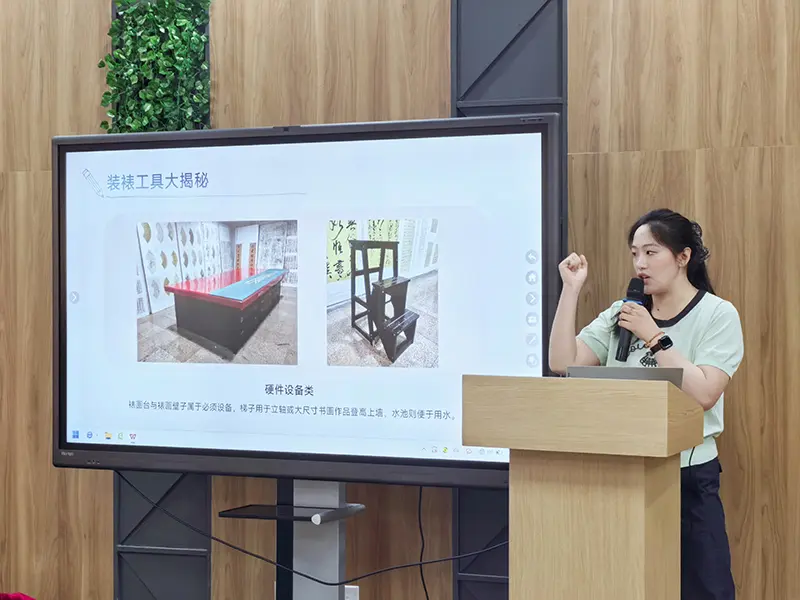
At the beginning of the program, museum conservator Wang Hua delivered a thematic lecture titled “A Young Mounting Artisan: Exploring the Art of Chinese Painting Mounting.”
The lecture covered the historical development of mounting techniques, essential tools and materials, stylistic differences, and practical applications. Special attention was given to the elegance of the “Su-style mounting technique,” a provincial-level intangible cultural heritage. Participants also learned that mounting professionals are often referred to as “doctors of paintings and calligraphy” due to their role in preserving fragile artworks.
This session helped students gain a comprehensive understanding of a craft that has been passed down for nearly two thousand years.
From Theory to Gallery Experience
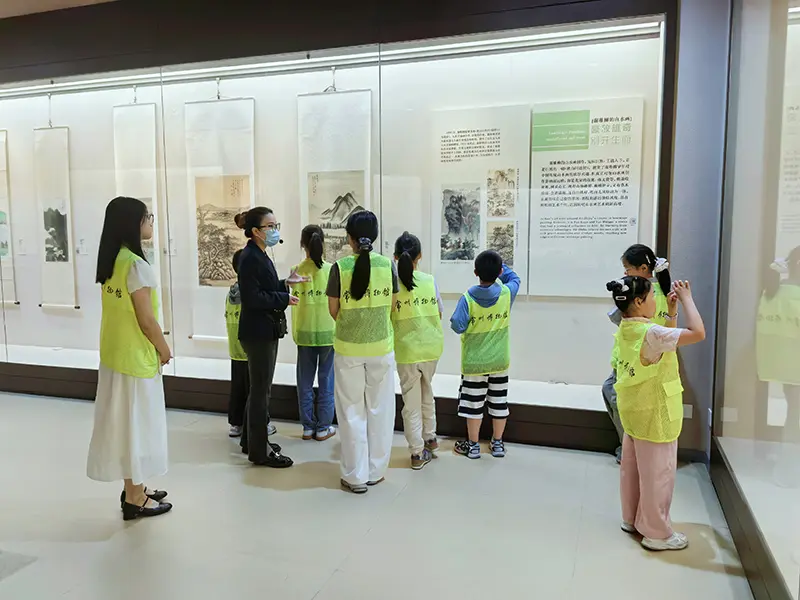
In the second stage, participants visited the Xie Zhiliu Art Gallery inside the museum, where they closely observed classical Chinese paintings and calligraphy works.
Guided by docents, students examined the structural features of vertical scroll mounting and appreciated how proper mounting enhances both the preservation and aesthetic presentation of artworks. This step helped connect theoretical knowledge with real cultural artifacts.
Hands-on Practice: Becoming a “Young Conservator”
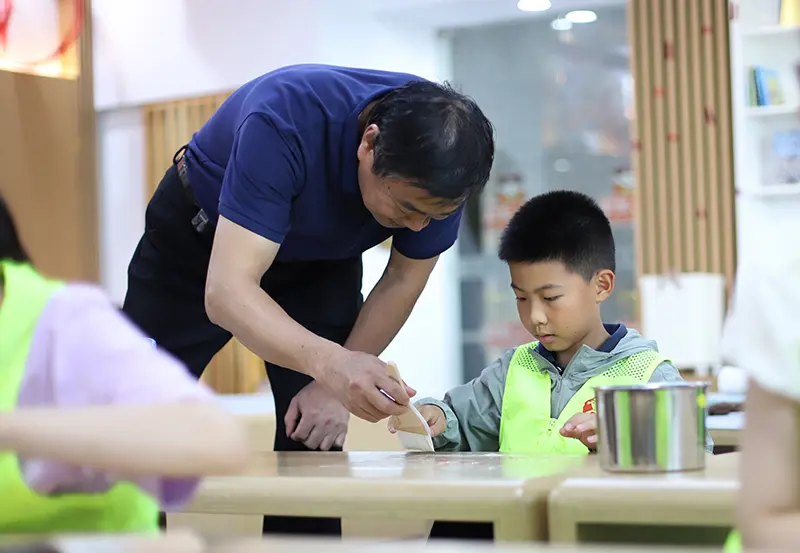
During the practical workshop, students worked under the guidance of museum experts, including Director Ding Weixin and conservator Wang Hua from the Cultural Relics Conservation Department.
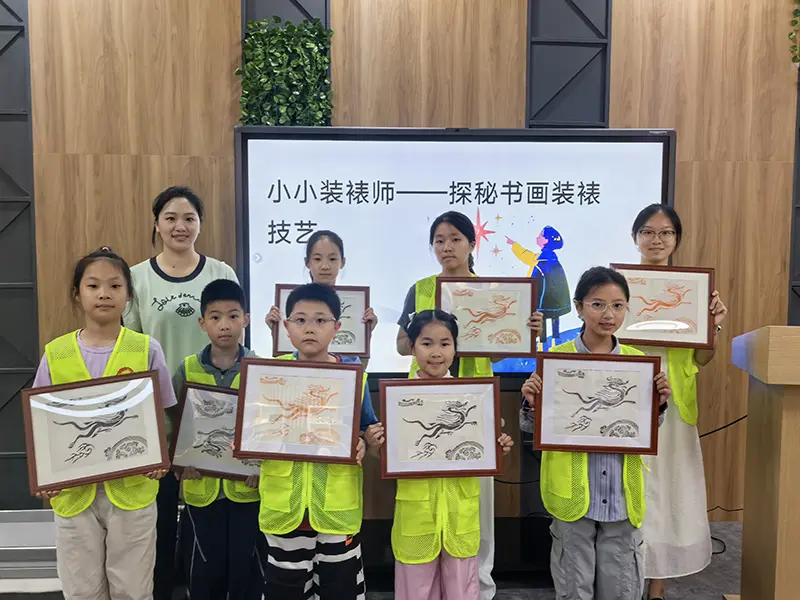
Starting with the core process of “backing the artwork”, they carefully followed traditional techniques: applying starch paste evenly, aligning paper precisely, and removing air bubbles. Every step required patience and precision, allowing participants to experience the discipline and craftsmanship behind traditional conservation work.
By the end of the session, each participant successfully completed their first mounted artwork, marking their first step into the world of cultural preservation.
A Deeper Connection with Cultural Heritage
This workshop was more than a technical training session—it was a meaningful connection between young people and museum professionals.
Through immersive participation, students not only learned how cultural relics are preserved, but also gained a deeper understanding of the dedication and daily commitment of museum workers who safeguard cultural heritage.